Thursday, November 2, 2017

Jack Cole and Plastic Man (Commentary)


Thoughts before Reading:
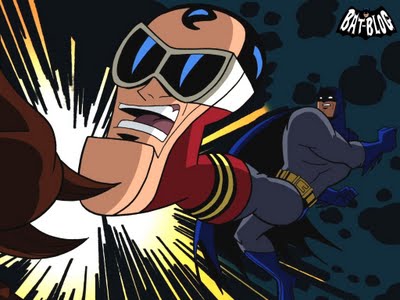
Oh boy I had no idea we were ever going to touch base with THE Plastic man. He's a very niche superhero compared to more known heroes like Superman or Wonder woman. I first saw him in a Batman animated movie as a kid. The internet was still a mystery to me so I couldn't really do research about him when I wanted to so he just disappeared into my memories. Recently popular tv show "The Flash" actually hinted that the Plastic man might make an appearance in this season, so imagine my surprise when I learn that we have to read about it in class. (A fun convenience..really)

Post comic commentary:
It took me a little bit of googling to understand who Jack Cole was. I had no idea that he was the creator. It's common for comic writers to resemble their characters so I was curious of what Jack Cole might've been like because I really like the Plastic man's boyish and energetic personality. The information I found led me to learning Jack Cole had actually committed suicide, which is really tragic. Because he was so uppity to the comic community no one saw it coming.

Whatever events led up to this he did not get lost into history. The whole point of Art Spiegelman  making this compilation is to pay tribute.

Okay so actually after reading about 3/4 of it I really enjoyed it. Unlike other superheroes that are sort of uptight about justice Plastic man held some sort of comedic fun. He still cared about doing right, but at the same time he'd use his powers to do silly/dumb things like looking up skirts and whatnot. Even the side characters, antagonists, and rivals had so much character. The dialogue was pretty on point as well. Not too wordy and expressive enough where I can almost imagine what they might sound like. It didn't feel too wordy and didn't feel like I was reading a book more like a cartoon in my head? (I don't know if that makes sense!!)

Overall reading about Plastic man's history was a very positive experience and I look forward to how "The Flash" will portray him in the show. I hope they keep his boyish nature and humor!

Little Nemo in Slumberland

I remember quite clearly that the first thing that had come into mind when reading this book was if Alice from "Alice in Wonderland" were a boy. Though back then it was a weekly comic page and the book I read it from compiled most all his adventures in "order".

Little Nemo in Slumberland is composed so it shows this amazing surreal adventure with the last panel always being some sort of abrupt awakening. (Which is relatable to those who dream and wake up when they do not want to) I don't know if McCay did this intentionally but the concept of the boy waking up at the end and signifying it's end makes it feel like the reader is Little Nemo. A boy who just wants to know what happens next? What does it mean? That's what I feel like really compels the readers to keep wanting to read more in anticipation of what comes next.


McCay really hit it out of the ballpark not only during his generation, but to people who appreciate the classics to this day. His use of colors, narrative, and consistency really showed he knew what he was doing. His work did not go noticed. Before ever coming to this class I remember the title vividly from childhood where there used to be an anime my mom would put on. It was not from my time (1989 to be exact) but after rewatching the animation studio tried it's very hardest to mimic that dream like aesthetic though it did have a darker color palette. In 2014 as well Eric Shanower attempted to make a continuation tribute by making "Little Nemo Return to Wonderland". It was about Little Nemo and touching base to those he met along the way. But personally I think it fell flat because everything that McCay worked for almost seemed in vain. They did not keep the tradition of him waking up in the end rather it was one consistent dream until the last page of the comic. The concepts were even there (Ie. Dragon chariot, clowns, and princesses) but the more modern dulled out colors really made it uninteresting and no longer this spectacular feeling in contrast to Mccay's bright saturated colors.

Overall Winsor McCay's Little Nemo in Slumberland is a timeless comic that will be appreciated in both comic and art world.

Wednesday, August 30, 2017

Une semaine de bonté - A Commentary

Page 1:
There is a lady taken aback by a chicken. Maybe she's afraid of them. (or maybe it's Maybelline) There's not much of a direction or composition in this panel so it's actually hard to tell whether or not the chicken is within her view.

Page 2:
Same lady is going through sleep paralysis and usually lucid dreaming can turn into nightmares. She cannot move or speak. Only to helplessly try to wake up as she sees a giant chicken looming over her body.

Page 3:
She goes back into dreaming though she dreams that she's died and gone to hell. Hell is where the chicken men are and she must live her life amongst these beings. Below she sees herself in a coffin.

Page 4:
The chicken men speak amongst themselves over the body. Pitying for it's lifeless soul.

Page 5:
Plot twist she actually did die in real life and chicken men aren't just something of a dream rather they replace human men.... I guess... The chicken man is devastated to see her dead, but also fear what others might think if he was caught in the same room as her lifeless body.

Page 6:
Afraid, the chicken man hangs her body and hides so no one witnesses him on the scene.


Wednesday, August 23, 2017

The Arrival by Shaun Tan - A Commentary

In this time it shouldn't be a surprise that things that are wordless and speechless, yet understandable exist. Silent movies were introduced during the 1890's and the first animated silent film was invented in 1906 (Humorous Phases of Funny Faces by J. Stuart Blackton). The way Shaun Tan illustrated his graphic novel was in a way a sequential of a movie. Like pre-productions of a storyboard. Though the world he created around The Arrival was most all imaginary. It exaggerated the feeling of when someone sees something foreign and almost unexplainable through his art. Ergo the dragon tails that loomed over the main characters hometown (most like corruption or oppression) or the strange fruit,machines, and environment he had seen in the new area.

A successful wordless graphic novel like The Arrival must rely on mime like expressions where they must exaggerate common actions to get the point through. An example would be, when the main character was most often seen confused and in need of assistance. Readers would see him point in confusion, see a grateful expression when someone helps him, and walk around with wonderment as he examines the new things around him. A recurring focal point in most panels were the characters faces.

When people see something they cannot read they look for the hidden details. Symbolism, scenery, emotions, and actions without words; these are things that made The Arrival a universal/ timeless comic. Immigrants around the world can mentally "read" and sort of relate with the book. Giving them a sense of ease knowing that this must be how most immigrants feel. It doesn't matter what year this book is read, nor does it matter where someone lives in this world, or what their language is because lucky for them there are no words to be read in this piece or art comic.